
Steel vs Paper Targets: Why You Might Be Shooting the Wrong Target (And How to Fix It)
If you’ve ever gone to the range and felt like you’re spinning your wheels, missing your training goals, unsure what to focus on, or just bored with predictable drills. Then you’re in the right place. Today we’re breaking down the "target debate" that every shooter eventually hits: Steel Targets vs Paper Targets.
There’s a ton of hype on both sides. Some people act like Steel Targets is the only thing worth shooting. Others treat Paper/Cardboard Targets like the holy grail of marksmanship. But if you want to train like a shooter who actually improves, you need to know where each shines, and where each fails you. We can finally end this discussion of which shooting target is the best.
The Argument You Didn’t Know You Were Having
Neither steel nor paper is inherently better across the board. They’re different tools for different goals. Each has strengths, limitations, and a way they teach you about your shooting...intentionally or not.
What target is everyone shooting with?
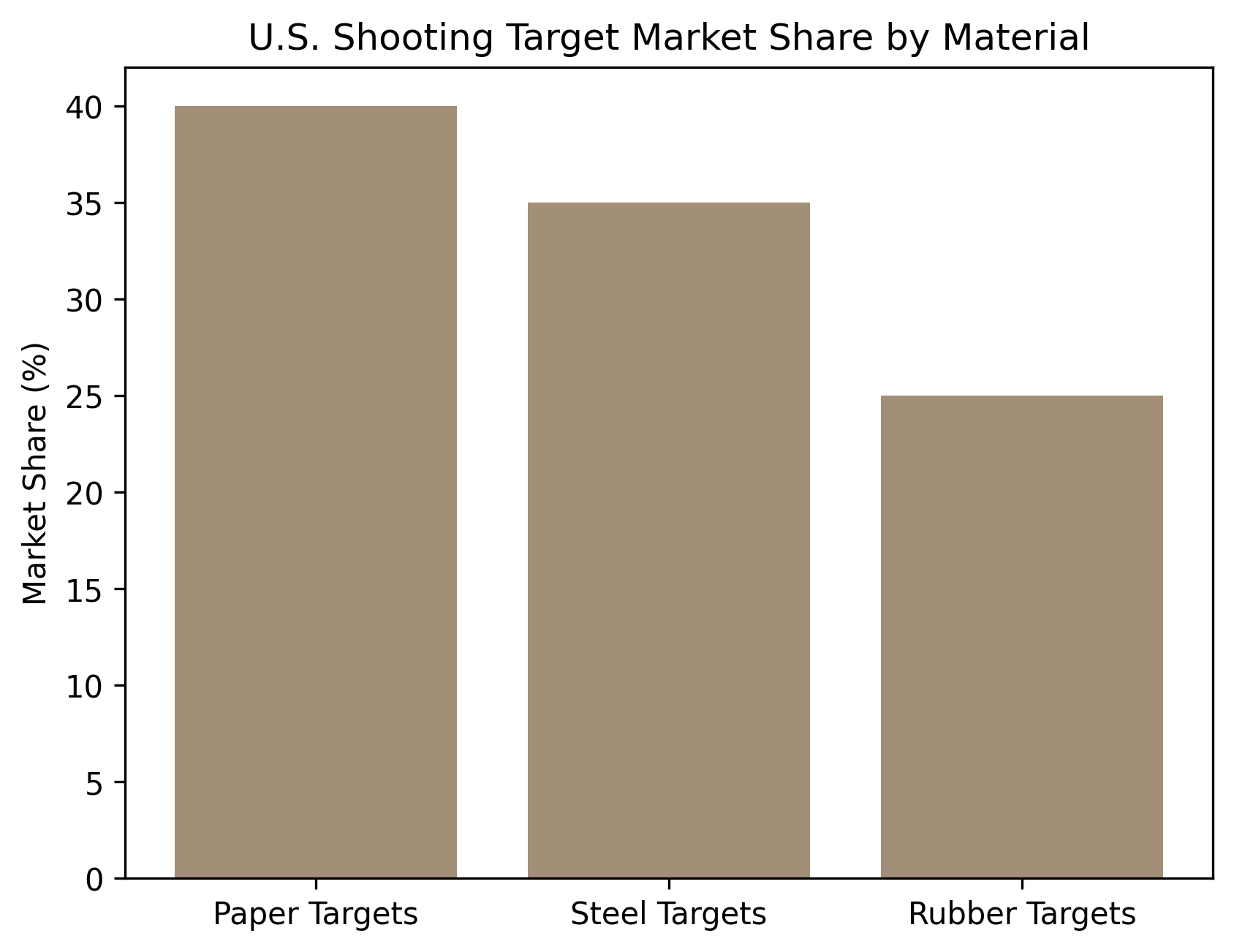
Research from Verified Market Reports states,
"The largest share was held by the Metal Paper Shooting Target [Paper Targets] segment at 40%, followed by Steel Shooting Targets at 35%, and Rubber Shooting Targets at 25%."
- (https://www.verifiedmarketreports.com/product/shooting-target-market/)
In short:
- 40% of shooters are training on Paper Targets
- 35% of shooters are training on Steel Targets
- 25% of shooters are training on Rubber Targets
STEEL TARGETS: Why Everyone Loves Them (And Why You Shouldn’t Blindly Pick Them)
The Big Advantages
Instant Audible Feedback
Steel targets provide immediate confirmation when you hit them. You hear a ping, and you know instantly whether your shot connected. This feedback is especially helpful for dynamic drills and movement exercises, where walking downrange to see results isn’t practical.
Builds Real-Time Habits
Because steel tells you “hit” vs “miss” immediately, it helps build quick reflexes and self-correction. In high-speed or scenario-based drills, this type of feedback can accelerate improvement in ways paper simply cannot.
Durable and Long-Lasting
AR500 Steel targets, when properly made and maintained, can withstand thousands or even hundreds of thousands of rounds. This makes them ideal for repeated practice without constantly replacing targets.
Great for Action and Distance
Steel targets work well at longer ranges where hole placement is harder to see. They are perfect for drills that prioritize speed and reaction over pinpoint precision.

The Drawbacks
Can Mask Accuracy Problems
Steel only tells you if you hit or missed—it doesn’t show where your shot landed. A misaligned shot may make the same sound as a perfectly placed one, hiding poor fundamentals until they become habits.
Safety Concerns
Steel requires proper distance, angles, and setup to avoid ricochets. Our steel is designed to be the safest on the market, read how TA Targets handle ricochets. But, using our steel incorrectly can be dangerous, especially in indoor or close-quarters environments.
No Precision Feedback
Because you don’t see the hole placement, you lose detailed information on how to improve fine accuracy. This can make steel less effective for training that focuses on pinpoint shot placement.
Heavy and Less Portable
Steel targets are often bulky and require effort to transport and set up, which can slow down training compared to easily taped paper targets.
PAPER TARGETS: The Classic… But Not Perfect
Why Paper Still Matters?
Precision Feedback
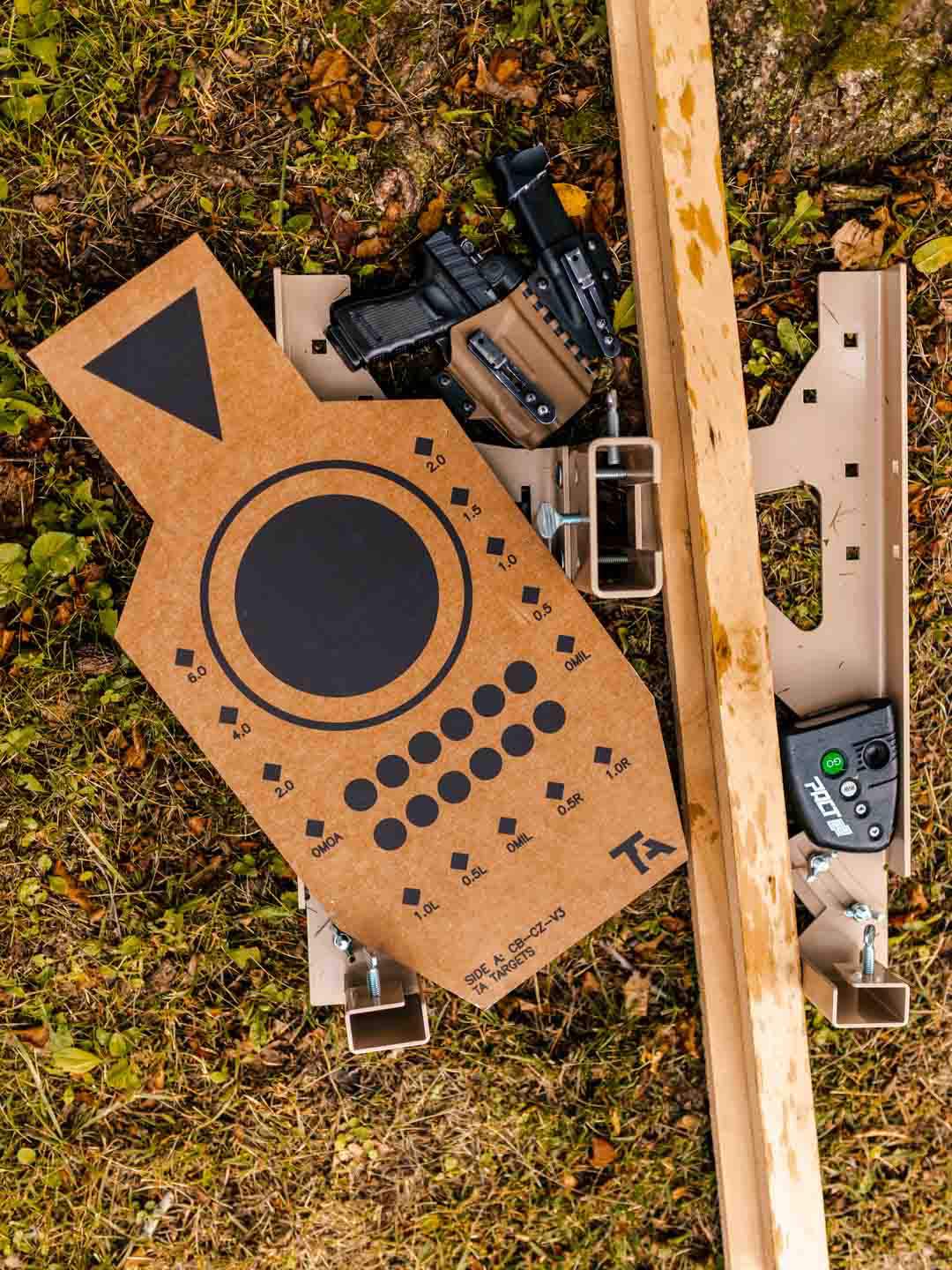
Paper targets give a visual representation of your shot placement. This makes it easy to identify trigger pull issues, flinch, or other technical problems. For anyone serious about accuracy, paper provides the feedback steel cannot.
These are perfect when preforming the Delorean Drill from Haley Strategic.
Affordable and Easy to Use
Paper is cheap, disposable, and versatile. You can tape it to a cardboard backer or post and replace it instantly after a session, making it ideal for frequent practice.
Scoring and Progress Tracking
Paper can have scoring rings, grids, or other markings to help track improvement. This quantitative feedback is critical for competition shooters and anyone focused on measurable progress.
Affordable and Easy to Use
Paper is cheap, disposable, and versatile. You can tape it to a cardboard backer or post and replace it instantly after a session, making it ideal for frequent practice.
Scoring and Progress Tracking
Paper can have scoring rings, grids, or other markings to help track improvement. This quantitative feedback is critical for competition shooters and anyone focused on measurable progress.
But Paper Has Limitations
Requires Range Walks
To see your shot placement, you often need to walk downrange. This interrupts drills, slows practice, and can make fast-paced training less effective.
Less Engaging
Paper doesn’t provide the audible feedback of steel. Some shooters find it less motivating, which can reduce training intensity.
Not Durable
Repeated hits, wind, or rain will destroy paper targets quickly, requiring frequent replacement.
THE REAL TRAINING TRUTH: You Need Both
Many shooters make the mistake of picking only steel or only paper. The most effective training uses both.
How to Combine Them
Use Paper Targets For:
- Precision and fundamentals
- Zeroing your sights
- Diagnosing shot placement errors
- Competition-style scoring practice
Use Steel Targets For:
- Speed and reflex training
- Dynamic drills
- Long-range target acquisition
- Instinctive engagement
By combining the precision of paper with the real-time feedback of steel, you train both accuracy and speed—covering all the skills needed to become a better shooter.
Our Final Recommendation - Use both Steel and Paper
Stop thinking of steel as the only “good” option or paper as outdated. Both have measurable value. To stop plateauing, structure your training with intentional variety:
- Start with paper to refine fundamentals and shot placement.
- Switch to steel for confirmation drills, speed, and reflex work.
- Combine both in advanced drills: score on paper, confirm on steel.
This approach ensures your skills improve in a way that transfers outside the range—whether in competition, defensive scenarios, or simply shooting your best every session.
Sources
Verified Market Reports. Shooting Target Market Size, Share, Growth, and Forecast. Verified Market Reports, www.verifiedmarketreports.com/product/shooting-target-market/. Accessed 23 Dec. 2025.
Paper vs Steel Targets - Which Is Better?